
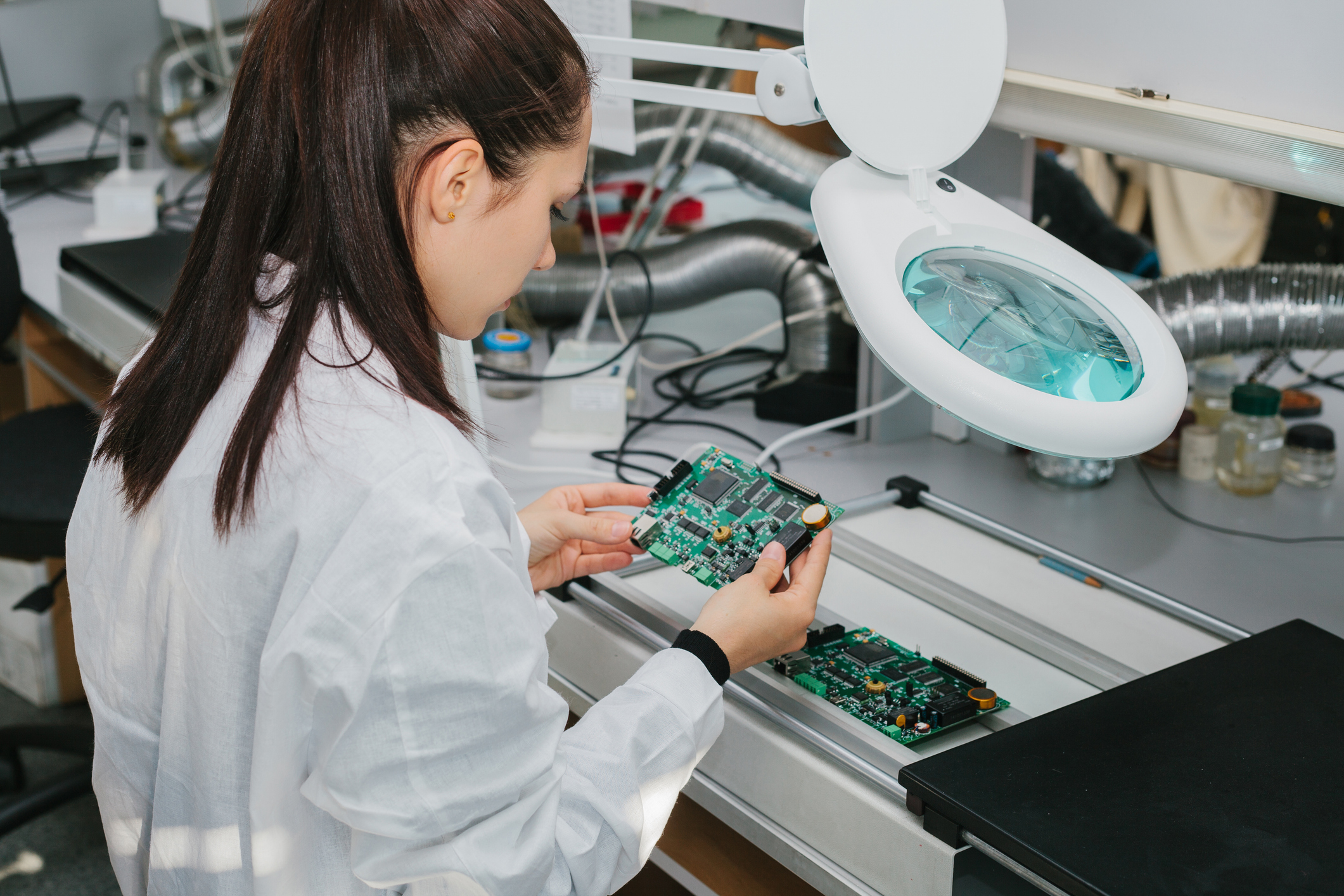
Common Fastener Failures in Electronics and How to Prevent Them
In electronics manufacturing, fastener failures rarely show up as dramatic breakdowns. More often, they surface quietly—as rework, cracked boards, stripped threads, grounding inconsistencies, or assemblies that don’t hold up over time.
These issues are often treated as isolated quality problems. In reality, many stem from predictable fastener-related failure modes that can be prevented by selecting fasteners engineered specifically for electronics environments—such as self-clinching nuts, studs, and standoffs.
Below are the most common fastener failures seen in electronics assemblies—and how manufacturers can design them out from the start.
1. Fasteners Loosening Under Vibration or Thermal Cycling
Electronics assemblies are frequently exposed to vibration, temperature changes, and repeated use. Traditional screws and nuts depend heavily on torque to remain secure, which can degrade over time.
Why it happens
- Standard threaded fasteners not designed for vibration
- Torque loss from thermal expansion and contraction
- Reliance on secondary locking methods
How to prevent it
- Use fasteners that become permanently anchored in the base material
- Eliminate dependence on torque alone for retention
- Specify hardware designed to resist rotation and push-out
Self-clinching nuts and studs mechanically lock into sheet metal, creating a permanent fastening point that resists loosening throughout the product’s life.
2. PCB Cracking and Board Damage During Assembly
Printed circuit boards are highly sensitive to uneven loads and overtightening. Direct fastening without load control is a common cause of cracking, delamination, and long-term reliability issues.
Why it happens
- Excessive or inconsistent torque during assembly
- Fasteners pulling directly against the PCB
- Lack of defined spacing between components
How to prevent it
- Use standoffs to control spacing and distribute loads
- Separate mechanical load paths from sensitive boards
- Select fastening solutions that don’t rely on high assembly torque
Self-clinching standoffs provide fixed, repeatable spacing and help protect PCBs from mechanical stress during assembly and service.
3. Stripped Threads in Thin Sheet Metal
As electronics enclosures become thinner and lighter, tapped threads in sheet metal become increasingly unreliable—especially when assemblies require repeated service.
Why it happens
- Insufficient material thickness for traditional threads
- Repeated installation and removal
- Over-tightening in thin sections
How to prevent it
- Reinforce thin materials with permanently installed threaded hardware
- Avoid cut or tapped threads in sheet metal when possible
- Use fasteners designed specifically for thin-wall applications
Self-clinching nuts create strong, reusable threads in thin materials without increasing enclosure thickness or complexity.
4. Assembly Inefficiency and Lost Hardware
Loose washers, spacers, and nuts slow down assembly and introduce opportunities for error—especially in high-volume or high-mix electronics environments.
Why it happens
- Multi-piece fastening stacks
- Manual alignment during installation
- Dropped or missing components
How to prevent it
- Reduce part count wherever possible
- Use captive or permanently installed fasteners
- Simplify fastening steps for operators
Permanently installed hardware eliminates loose components, improving assembly speed, consistency, and repeatability.
5. Grounding and Electrical Performance Issues
In many electronics applications, fasteners also play a critical role in grounding and EMI shielding. Improper fastener selection can compromise electrical performance.
Why it happens
- Insulating coatings used where conductivity is required
- Inconsistent metal-to-metal contact
- Ground paths not considered during fastener selection
How to prevent it
- Specify fasteners designed to maintain electrical continuity
- Ensure consistent contact surfaces
- Validate grounding paths during design, not after production
Fastener choice directly affects electrical performance—not just mechanical integrity.
6. Inconsistent Quality From Hardware Substitution
Even when fasteners are properly specified, substituting hardware late in the process can introduce dimensional, material, or performance differences that lead to failure.
Why it happens
- Emergency sourcing or spot buys
- Non-standard alternates
- Limited documentation or traceability
How to prevent it
- Standardize fastener types across products and platforms
- Use engineered fastener families instead of general-purpose hardware
- Maintain approved part lists and alternates
Consistency in fastener selection is critical to maintaining quality in electronics assemblies.
Preventing Fastener Failures Starts Early
Most fastener failures in electronics don’t originate on the production floor. They start with early design decisions that prioritize availability or familiarity over long-term reliability.
Manufacturers that successfully reduce fastener-related issues typically:
- Involve fastener expertise early in the design process
- Use engineered fastening solutions instead of general-purpose hardware
- Standardize fasteners to reduce SKU complexity
- Align engineering, quality, and procurement teams
Fasteners may represent a small percentage of total product cost, but failures tied to them can result in rework, scrap, downtime, and field issues that far outweigh the cost of the part itself.
Selecting fasteners designed specifically for electronics—such as self-clinching nuts, studs, and standoffs—can eliminate entire categories of failure before they ever occur.
NAPPCO helps electronics manufacturers evaluate fastening methods, simplify hardware selection, and build reliable fastener programs from prototype through production.